Does your USPSA classification matter?
In fact, does any action shooting classification matter?

For reasons I’m not entirely sure I understand, I spent about 45 minutes on Sunday afternoon in my office, briefly crunching the numbers on how many classifiers and what % I’d need to shoot on each one to make A-class in every USPSA division. Like I said, I’m not entirely sure why I did that, other than I had looked up my classification for an unrelated reason and then my autism was all “hey let’s do some math for fun.”
As I was performing this entirely pointless mathematical exercise, I got to thinking about classifications in general, and how much they actually matter. In fact, does your shooting sports classification matter at all?
Stating the Obvious
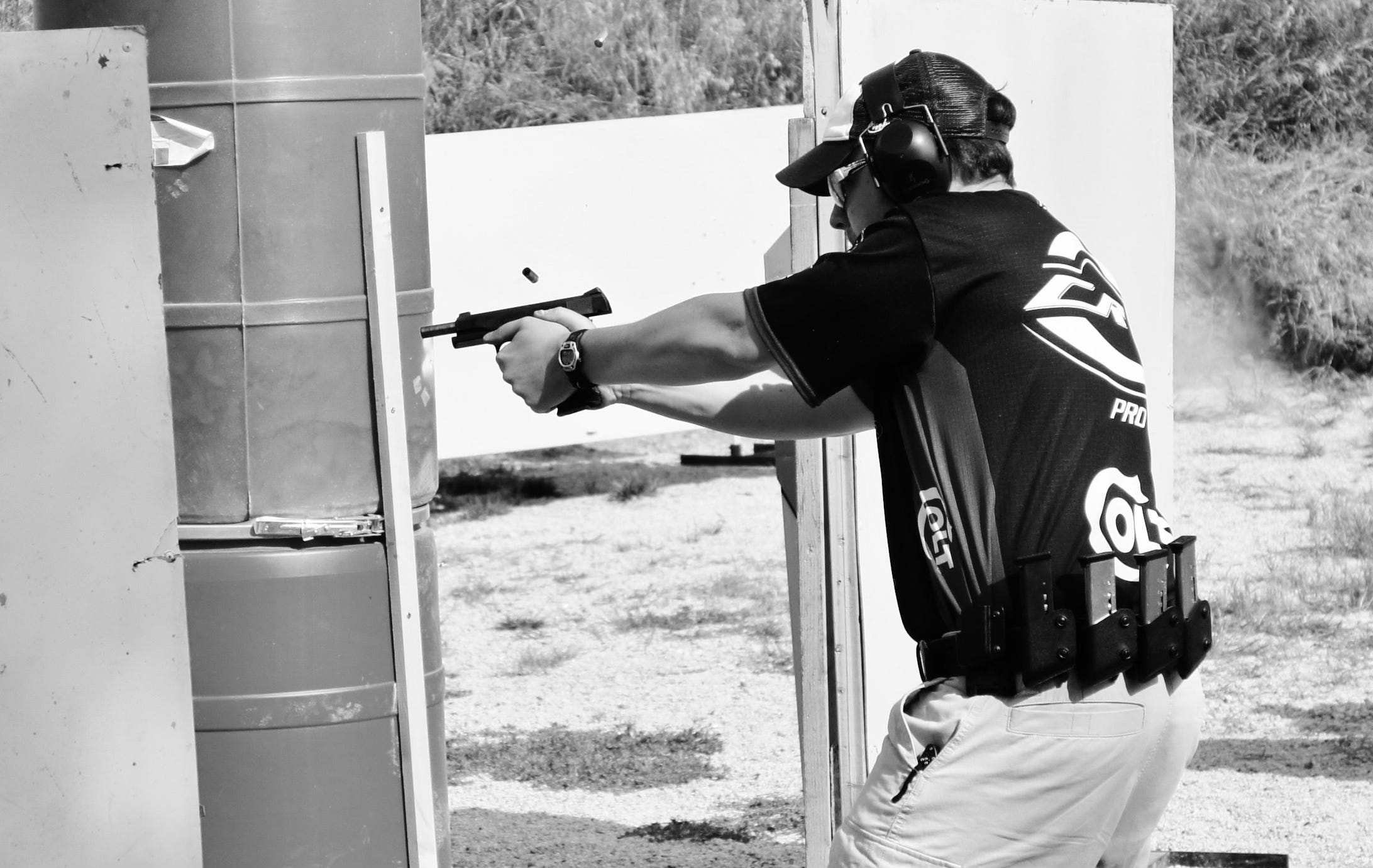
Right off the bat, I’ll say this: if you care about USPSA as a sport and getting better at USPSA, then your classification is obviously going to matter. Sure, there are guys who say “I don’t care about my classification I only care about the journey of getting better at shooting,” but I’m going to let you in on a secret: those guys are lying. They either deeply hate that they’re stuck in B-class or are deeply smug about making M. But anyway, if you care about USPSA, then of course your classification matters. It’s an objective measure of your skill within the sport.
But what if you don’t care about USPSA as a sport? What if you are one of the many gun owners who was told that shooting matches is a good way to improve your shooting and gun handling skills, even if your primary reason for owning a gun and shooting matches is to enhance your ability to defend yourself? Does your USPSA classification matter then? Hell, does any classification matter?
The Purpose of Classification Systems
All of the handgun sports in the United States use some sort of classification system. Bullseye, CMP Action Pistol, Steel Challenge, ICORE, USPSA, IDPA, and I think even PCSL has one now. The point of a classification system is two-fold: it provides the organization a way to stratify their competitor’s skill sets, and it encourages further competitor participation in a sport where mid-level shooters compete alongside the best in the world.
The shooting sports in the USA are unique in that regard. You wouldn’t see a JuCo track athlete going head to head with a D1 superstar in the same meet, the same way you wouldn’t see a high school golfer playing in a PGA tournament with the pros. But you do in the shooting sports version of that. Every weekend at matches across the country, and even more so at the various state, regional, and national championships.
One of the advantages to classification systems is that it encourages people who know they’re never going to win a National Championship to come out to the these major events. I’ve seen real impressive battles over High Expert or Top A class at various matches, and if that’s what gets you out of bed to come and shoot, that’s awesome. For other people, the simple act of chasing a classification becomes their goal in the sport, and that’s awesome too.
Classifications are also useful to people outside of the sport because they’re a handy benchmark of your shooting skill. I know that an A-class USPSA shooter is objectively better at the sport of USPSA than a C-class USPSA shooter.
“At the Sport Of”
That part in italics from the previous paragraph is important, because it’s important to remember that all of these sport’s classification systems ultimately measure the shooting (and in some cases non-shooting skills) that the sport measures. So someone could be a C-class USPSA shooter because they’ve not made it their focus, but is a national championship bullseye shooter. Is that guy an objectively worse shooter than a USPSA A-class shooter? No. Is he worse at USPSA? Yes. That’s an important distinction to remember, and especially important if you’re using the shooting sports as a vehicle to improve your defensive firearms skills.
If you’re into the shooting sports to pursue excellence in the shooting sports, that’s awesome. If you’re into the shooting sports because you carry a gun every day and you want to be better with your carry gun, that’s also awesome. However, if you’re the latter, you need to understand that there will come a point where the time investment in getting better at the shooting sports will begin to consume more time than you see gains in real world skill.
I’ll give you a mathematical example of what I mean by this. Take the USPSA classifier 6 Chickens, 03-02. If you shoot all A-zone hits in 10 seconds, you’ll turn in an A-class time. If you shoot that exact same course of fire with all A-zone hits 1.15 seconds faster, you’ll turn in a Grand Master time. This matters because every single credible expert agrees that an A-class USPSA shooter has all the tools they need to solve basically any defensive firearms encounter ever. In fact, in a conversation I had with a close friend from the special operations community, he commented that your elite operators aren’t even A-class, they’re usually B-class level shooters, the difference is that they have to be B-class in shooting, hand to hand fighting, swimming, jumping out of airplanes, radios, etc.
Anyway, back to the point. The point is that if you’re solely engaged in the shooting sports to make yourself better with your personal protection firearms, the amount of time and effort you’d need to invest to find that extra 1.15 second is going to enter the territory of diminishing returns. I know, because I did it. When I was really serious about USPSA, I was shooting a match every single weekend of the month, sometimes two per weekend. I’d shoot 4-6 matches per month, plus be at the range twice a week to train individual skills. I got within 3% of making M in USPSA, and when I look back on it, my life basically revolved around getting better at shooting (I’m sure people are wondering why I never finished that quest, but that’s a story for a different time). Then, during COVID, I got the itch again and spent about 6 months dry firing and range training like a maniac until I made M in ICORE’s Classic division, which is one of, if not the most difficult shooting accomplishment of mine. Because I’m married with a child, the quest for ICORE M ate up all my “personal” time, so I wasn’t really doing anything fun in my free time.
Perspective and Balance
Which brings us all the way back to the original question. Does your classification matter? As it turns out, the only person that can answer that question is you. If it matters to you, then it really matters. If it doesn’t matter, fantastic!
My two pieces of advice are this. 1) don’t lie to yourself. Don’t say that your classification doesn’t matter to you when in reality you just hate that you can’t break out of whatever class you’re stuck in. Be honest with yourself. 2) is related - prioritize your training time. If you’re training to be good at the shooting sports, train for that. If you’re training to defend your life, once you reach USPSA B-class/IDPA Expert class, you have pretty much all the gun skills you could possibly need. Make sure you maintain your skills, but take some time to work on other weak spots. Combatives, verbal judo, physical fitness (seriously your physical fitness), driving skills, etc. If you can get all of those up to B-class, you would be an absolute MENACE to any threat.
But most importantly, and I cannot say this enough: do whatever makes you happy.
Great Article! Regards, Jude Lifetime USPSA Member 3WF.news
I think there is a third type of competitor using the classification system, rare and different. This is the competitor for whom the process of advancement is personally rewarding. This is the competitor who is sport-agnostic. The goal this year might be USPSA Master. Upon attaining it, he or she never shoots a gun again, but then switches to a goal of Master Bowman in Archery, then an A ticket in motorcycling, etc.